Heavenly Father not only told Brigham what to do for the entire Church, but also for individuals when Brigham needed their help to colonize the west.
Aroet Lucious Hale records in his journal that he and several others were called at April Conference of 1855 to serve a mission to the Navajo Indians in the Colorado River area. Their main camp was to be in Las Vegas. It was not a safe place to go because the Indians raided emigration parties who passed through on their way to southern California. The Indians stole the pioneers’ animals and sometimes killed the men, leaving the women and children in the desert.
Before the missionaries traveled to Las Vegas, Brigham gave them a blessing that if they would remain prayerful and follow Brigham’s “council strictly,” they would return safely to their families and find them all well.
On their mission, one of the missionaries nearly drowned crossing the Colorado River. He and his horse went into a deep, swirling hole, sucking both of them under the water and pulling the man off his horse. The missionaries on the bank thought he was dead. But the man swam to the surface, coughing and sputtering. He grabbed the horse’s tail and was pulled to the bank. Brother Hale remembered President Young’s blessing and was grateful for it.
Another time, seven of the missionaries, including Brother Hale, were out scouting when they were surrounded by twenty Navajos covered with war paint, bows drawn, and arrows pointing at them. The missionaries’ Indian guide ran away, and the men were left alone. Their interpreter, George Been, told the Navajos that the Mormons were sent by the Great White Chief Brigham Young to trade with them if they would smoke the peace pipe.
George Been found out from the Indians that the chief’s papoose was sick and dying. The Navajos said their god was angry because the Indians allowed the white man to cross their lands. If the child died, the Mormons would all be killed at sundown. George convinced the Indians to allow the missionaries to go to their camp and smoke the peace pipe. After they smoked, the missionaries were permitted to see the papoose. A missionary named Brother Snider took his handkerchief, dipped it in warm water, and washed the child. When the child was clean they knelt around the papoose and administered a blessing. The child opened his eyes and was healed. The missionaries fed the papoose a little bread and sugar in warm water. It was all the food they had with them. The men were allowed to return to Las Vegas unharmed.
Aroet Lucious Hale thought again of President Young’s blessing and was thankful. Every missionary eventually returned home to find their families safe and well.
Joseph Smith
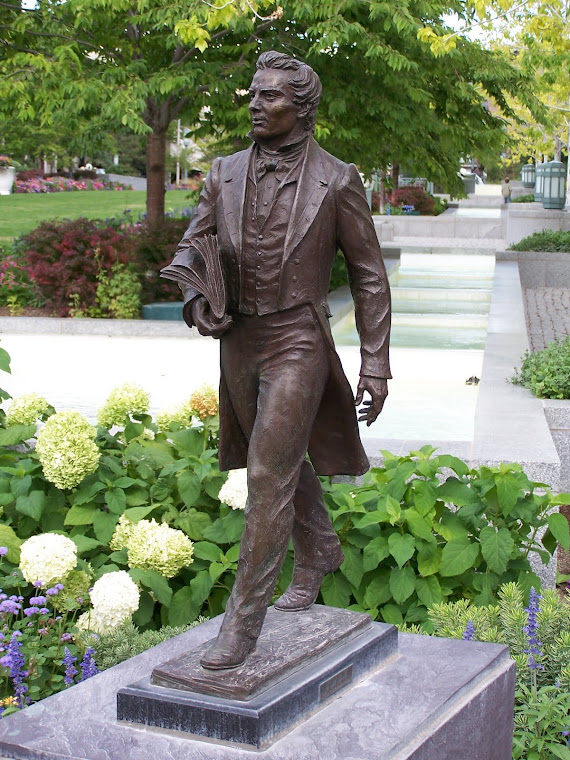
Prophet, Seer and Revelator
Saturday, February 12, 2011

Saturday, February 5, 2011
Follow the Prophet
Right after the pioneers came to the Salt Lake Valley, the gold rush began in California. Some of the Saints wanted to leave to work the California gold fields and then return to Utah with lots of money.
Brigham knew Heavenly Father wanted the Saints to stay in the Salt Lake Valley. He told the people that “Those of you who stop here and are faithful to God . . . will make more money and get richer than you that run after the God of this world; and I promise you in the name of the Lord [those] who stay here . . . will prosper and be able to buy you twice over. Here is the place God has appointed for his people.”
Some members of the Church decided to go to California anyway. Sam Brannan had brought a group of Mormons by ship from New York around the tip of South America to San Francisco, and he wanted the Church to relocate in California where the weather was mild and the gold was plentiful. Brother Brannan came to Utah to convince Brigham Young to move the Church there. When Brigham Young refused, Sam Brannan returned to the San Francisco area to get gold. He also bought and sold land and became one of the wealthiest men in California. But he acquired drunken habits and lost his family and all his money. He died a pauper.
Great Lesson for kids to teach them to follow the Prophet.
Brigham knew Heavenly Father wanted the Saints to stay in the Salt Lake Valley. He told the people that “Those of you who stop here and are faithful to God . . . will make more money and get richer than you that run after the God of this world; and I promise you in the name of the Lord [those] who stay here . . . will prosper and be able to buy you twice over. Here is the place God has appointed for his people.”
Some members of the Church decided to go to California anyway. Sam Brannan had brought a group of Mormons by ship from New York around the tip of South America to San Francisco, and he wanted the Church to relocate in California where the weather was mild and the gold was plentiful. Brother Brannan came to Utah to convince Brigham Young to move the Church there. When Brigham Young refused, Sam Brannan returned to the San Francisco area to get gold. He also bought and sold land and became one of the wealthiest men in California. But he acquired drunken habits and lost his family and all his money. He died a pauper.
Great Lesson for kids to teach them to follow the Prophet.
Saturday, January 29, 2011
Jim Bridger's Advice for Brigham Young
The first pioneer company traveled over five-hundred miles in seven weeks, reaching Fort Laramie by the first of June. After they rested, the wagon train continued west. Jim Bridger, and explorer and mountain man of the American west, rode up to greet them one night when they were camped beside the Sweetwater River. He advised Brigham Young not to go into the valley of the Great Salt Lake because crops wouldn’t grow there. He told Brigham that he would give a thousand dollars for a bushel of corn raised in the valley.
Brigham thanked Jim Bridger for his advice. But Brigham knew Heavenly Father wanted him to take the pioneers there, and he knew the Saints would survive. The corn and other crops would grow.
I wonder if Brigham Young ever collected from Jim Bridger.
Brigham thanked Jim Bridger for his advice. But Brigham knew Heavenly Father wanted him to take the pioneers there, and he knew the Saints would survive. The corn and other crops would grow.
I wonder if Brigham Young ever collected from Jim Bridger.
Saturday, January 22, 2011
Crossing the Wilderness
On the trail the pioneers found herds of buffalo. Brigham cautioned the men not to be wasteful, but to kill only as many animals as they could eat. They enjoyed the fresh meat and ate as much as they wanted, but those who ate too much had upset stomachs and digestive problems.
When the company reached the Platte River, the water ran high and swift. The animals swam across the river, and the men unloaded the wagons and carried their supplies to the other side in a leather boat they had with them. But getting the empty wagons across was more difficult. Brigham suggested they lash four wagons together and float them across with ropes tied to the wagon tongues to guide them from the other side. The river was so swift, it flipped the wagons over as if they were rolling logs. Next they built small rafts to ferry them across, but the rafts were swept away in the current. Brigham knew he could solve the problem so he took off his shirt and went to work. He and Willard Richards built a big, strong sturdy raft out of white pine and white cottonwood that carried the wagons safely across the river.
The company traveled over five-hundred miles in seven weeks, reaching Fort Laramie by the first of June. After they rested, the wagon train continued west. Jim Bridger, and explorer and mountain man of the American west, rode up to greet them one night when they were camped beside the Sweetwater River. He advised them not to go into the valley of the Great Salt Lake because crops wouldn’t grow there. He told Brigham that he would give a thousand dollars for a bushel of corn raised in the valley.
Brigham thanked Jim Bridger for his advice. But Brigham knew Heavenly Father wanted him to take the pioneers there, and he knew the Saints would survive. The corn and other crops would grow.
When the company reached the Platte River, the water ran high and swift. The animals swam across the river, and the men unloaded the wagons and carried their supplies to the other side in a leather boat they had with them. But getting the empty wagons across was more difficult. Brigham suggested they lash four wagons together and float them across with ropes tied to the wagon tongues to guide them from the other side. The river was so swift, it flipped the wagons over as if they were rolling logs. Next they built small rafts to ferry them across, but the rafts were swept away in the current. Brigham knew he could solve the problem so he took off his shirt and went to work. He and Willard Richards built a big, strong sturdy raft out of white pine and white cottonwood that carried the wagons safely across the river.
The company traveled over five-hundred miles in seven weeks, reaching Fort Laramie by the first of June. After they rested, the wagon train continued west. Jim Bridger, and explorer and mountain man of the American west, rode up to greet them one night when they were camped beside the Sweetwater River. He advised them not to go into the valley of the Great Salt Lake because crops wouldn’t grow there. He told Brigham that he would give a thousand dollars for a bushel of corn raised in the valley.
Brigham thanked Jim Bridger for his advice. But Brigham knew Heavenly Father wanted him to take the pioneers there, and he knew the Saints would survive. The corn and other crops would grow.
Saturday, January 15, 2011
A Daily Schedule
Here is a day in the life of the pioneers trecking west under the direction of Brigham Young. I don't know how long I'd last with a daily routine like this.
Each morning, the bugle sounded at five a.m. for everyone in the wagons to wake up and have prayers. Then they were to eat, feed their animals, and prepare to leave by seven a.m. They traveled all day long until the bugle sounded at eight thirty in the evening when everyone, dusty from the trail and weary from walking, was again to have prayer in their wagons and be in bed by nine o’clock.
If attacked by Indians, the wagons were to travel double file and pull into a circle with the wagon tongues on the outside and the animals inside the circle as they did every night. Along the way, Indians tried to steal their horses. A few times they were successful, to the irritation of Brigham. Guards were set to protect their animals.
At a distance, the Indians followed the movement of the pioneers from the time they left Winter Quarters. They burned the grassland ahead of the trail so there was no feed for the animals. The wind blew the ash from the fires across the prairie, stinging the pioneer’s eyes and throats and turning everyone black with soot until they could hardly recognize each other. ( And no washing machines to clean their clothes.)
I am grateful for my warm home and hot shower. Because of their efforts, I have a beautiful place to live and a testimony of the gospel.
Each morning, the bugle sounded at five a.m. for everyone in the wagons to wake up and have prayers. Then they were to eat, feed their animals, and prepare to leave by seven a.m. They traveled all day long until the bugle sounded at eight thirty in the evening when everyone, dusty from the trail and weary from walking, was again to have prayer in their wagons and be in bed by nine o’clock.
If attacked by Indians, the wagons were to travel double file and pull into a circle with the wagon tongues on the outside and the animals inside the circle as they did every night. Along the way, Indians tried to steal their horses. A few times they were successful, to the irritation of Brigham. Guards were set to protect their animals.
At a distance, the Indians followed the movement of the pioneers from the time they left Winter Quarters. They burned the grassland ahead of the trail so there was no feed for the animals. The wind blew the ash from the fires across the prairie, stinging the pioneer’s eyes and throats and turning everyone black with soot until they could hardly recognize each other. ( And no washing machines to clean their clothes.)
I am grateful for my warm home and hot shower. Because of their efforts, I have a beautiful place to live and a testimony of the gospel.
Saturday, January 8, 2011
Transfiguration of Brigham Young
After the death of the Prophet Joseph Smith, Brigham Young spoke to the Saints in Nauvoo in a meeting. As he spoke, Brother Benjamin F. Johnson, and many others, reported “as from Heaven, I heard the voice of the Prophet Joseph that thrilled my whole being and . . . I saw in the transfiguration of Brigham Young, the tall straight . . . form of the Prophet Joseph Smith clothed in a sheen of light covering him to his feet.” When Brigham addressed the Saints, he looked and sounded just like Joseph Smith, showing the people that the twelve apostles, with Brigham as president, were to lead the people.
Brigham knew he and the other apostles had to help the Church accomplish the purposes that Heavenly Father had revealed through Joseph Smith. Even though he was very sad that Joseph Smith was gone, he remembered the strength and power of Joseph the prophet. Brigham Young tried to follow Joseph’s example the rest of his life.
Brigham knew he and the other apostles had to help the Church accomplish the purposes that Heavenly Father had revealed through Joseph Smith. Even though he was very sad that Joseph Smith was gone, he remembered the strength and power of Joseph the prophet. Brigham Young tried to follow Joseph’s example the rest of his life.
Saturday, January 1, 2011
Appreciation for Life
Joseph F. Smith's first child, Mercy Josephine, died before her third birthday, he wrote: “My heart is bruised and wrenched almost asunder. I am desolate, my home seems desolate. … I look in vain, I listen, no sound, I wander through the rooms, all are vacant, lonely, desolate, deserted. … No beaming little black eyes sparkling with love for papa; … but a vacant little chair. … and only the one desolate thought forcing its crushing leaden weight upon my heart—she is not here, she is gone!”
As I read this quote, it made me appreciate the life and love of my children. How grateful I am for their lives and their light. Sometimes I take it forgranted, and I don 't ever want to do that.
Especially at this time of year I am grateful for the Savior and his Atonement that we may live again.
Subscribe to:
Posts (Atom)