Brigham felt it was important to educate women as well as men. He wanted women to learn about whatever they were interested in. “We think the sisters ought to have the privilege to study various branches of knowledge . . . they may . . . study law and physic [medicine], or become good bookkeepers . . . In following these things they but answer the design of their creation.”8
Ellis Reynolds lived in Pleasant Grove, Utah with her family. Her mother died when she was fourteen; and after her father remarried, she stayed with her grandparents. On a visit to Salt Lake City, she met one of Brigham’s step sons and was introduced to the Young family. Brigham saw Ellis again when he visited Pleasant Grove. He was impressed with her intelligence and zest for life, and invited her to come live at the Beehive house and go to school with his children.
Two years later Ellis married Milford Shipp and began her family. Her thirst for knowledge was so strong that she arose every morning at four a.m. to study before her husband and children awoke. At the age of twenty-eight, she left for medical school in Philadelphia with the blessing of her husband and Brigham. She completed her education and returned to Utah to practice medicine.
Joseph Smith
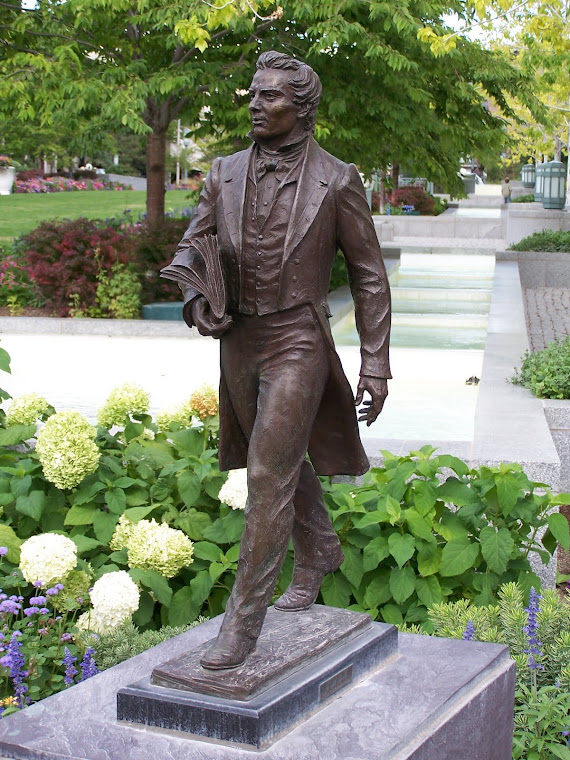
Prophet, Seer and Revelator
Saturday, April 30, 2011

Saturday, April 23, 2011
Brigham's Actions on Skipping School
Brigham had so many children of his own that he started a school for just his family. Don Carlos, Brigham’s son, cut school often because he loved to go with the men who drove Brigham’s wagons. When Brigham found out about it, he took Don Carlos to the barn and gave him a wagon hitched with two blind mules. Brigham told Don Carlos he could work hauling produce and ice around town, and bringing wood from the canyons.6 Guiding blind mules around the city was a difficult task, but Don Carlos was determined to succeed. He worked hard and accomplished the responsibilities given him.
Don Carlos soon became a good teamster, earning the right to drive the best team in the stables. At the age of twelve he was responsible enough to haul a load of wheat fifty miles north to Logan, Utah and back. However, he got tired of driving and was glad to get back to school.
Don Carlos graduated from the family school and then attended the University of Deseret in Salt Lake City. He went on to study in New York, obtaining a degree in engineering. He returned to Utah to pursue his interest in architecture. Being hired as Church architect, he was given the opportunity to redesign the towers of the Salt Lake Temple which were originally to be made out of wood covered with tin. He also designed the Church Administration Building on South Temple in Salt Lake, and the original Brigham Young University building in Provo.
Don Carlos soon became a good teamster, earning the right to drive the best team in the stables. At the age of twelve he was responsible enough to haul a load of wheat fifty miles north to Logan, Utah and back. However, he got tired of driving and was glad to get back to school.
Don Carlos graduated from the family school and then attended the University of Deseret in Salt Lake City. He went on to study in New York, obtaining a degree in engineering. He returned to Utah to pursue his interest in architecture. Being hired as Church architect, he was given the opportunity to redesign the towers of the Salt Lake Temple which were originally to be made out of wood covered with tin. He also designed the Church Administration Building on South Temple in Salt Lake, and the original Brigham Young University building in Provo.
Saturday, April 9, 2011
Brigham Young and Education
We might ask, when shall we cease to learn? I will give you my opinion about it: never, never.
Brigham Young
Before the pioneers came west, Brigham urged them to bring copies of books, maps, paper, pencils and other things that would be helpful in teaching children to read. So books and note pads were tucked into blankets in the wagon beds and brought west. At Brigham’s request, the Saints who sailed around South America brought with them a large library of school books.
The first school in the Salt Lake Valley opened in October of 1847, in an old military tent shaped like a wigwam erected in the middle of the fort. The teacher, Mary Jane Dilworth, sat on an old camp stool, and the students sat on logs. Some of the pupils brought slates to write on and others had paper and pencils. But a few wrote on smooth logs or dried bark with a piece of charcoal.
The first day of school, the teacher began with a prayer and then each pupil learned a psalm from the Bible. In the winter, schools were opened for adults. Several languages were taught, including Hebrew, Greek, and Latin. A series of classes cost $1.20 and an individual lecture was $0.20.
Brigham Young
Before the pioneers came west, Brigham urged them to bring copies of books, maps, paper, pencils and other things that would be helpful in teaching children to read. So books and note pads were tucked into blankets in the wagon beds and brought west. At Brigham’s request, the Saints who sailed around South America brought with them a large library of school books.
The first school in the Salt Lake Valley opened in October of 1847, in an old military tent shaped like a wigwam erected in the middle of the fort. The teacher, Mary Jane Dilworth, sat on an old camp stool, and the students sat on logs. Some of the pupils brought slates to write on and others had paper and pencils. But a few wrote on smooth logs or dried bark with a piece of charcoal.
The first day of school, the teacher began with a prayer and then each pupil learned a psalm from the Bible. In the winter, schools were opened for adults. Several languages were taught, including Hebrew, Greek, and Latin. A series of classes cost $1.20 and an individual lecture was $0.20.
Saturday, March 26, 2011
Brigham Young and Education
Before the pioneers came west, Brigham urged them to bring copies of books, maps, paper, pencils and other things that would be helpful in teaching children to read. So books and note pads were tucked into blankets in the wagon beds and brought west. At Brigham’s request, the Saints who sailed around South America brought with them a large library of school books.
The first school in the Salt Lake Valley opened in October of 1847, in an old military tent shaped like a wigwam erected in the middle of the fort. The teacher, Mary Jane Dilworth, sat on an old camp stool, and the students sat on logs. Some of the pupils brought slates to write on and others had paper and pencils. But a few wrote on smooth logs or dried bark with a piece of charcoal.
The first day of school, the teacher began with a prayer and then each pupil learned a psalm from the Bible. In the winter, schools were opened for adults. Several languages were taught, including Hebrew, Greek, and Latin. A series of classes cost $1.20 and an individual lecture was $0.20.
The first school in the Salt Lake Valley opened in October of 1847, in an old military tent shaped like a wigwam erected in the middle of the fort. The teacher, Mary Jane Dilworth, sat on an old camp stool, and the students sat on logs. Some of the pupils brought slates to write on and others had paper and pencils. But a few wrote on smooth logs or dried bark with a piece of charcoal.
The first day of school, the teacher began with a prayer and then each pupil learned a psalm from the Bible. In the winter, schools were opened for adults. Several languages were taught, including Hebrew, Greek, and Latin. A series of classes cost $1.20 and an individual lecture was $0.20.
Saturday, March 19, 2011
Mormon War II
Since the army was delayed through the winter, Colonel Thomas L. Kane, a long-time friend of the Mormons from the Missouri persecution, had time to get to Utah to help with the problem. He came, under a false name of Dr. Osborne, by way of the Isthmus of Panama to California and then on to Utah. In the spring Colonel Kane traveled to Wyoming to talk with Governor Cumming. He suggested that the governor come ahead of the United States Army to Salt Lake to meet the Church leaders.
When Governor Cumming met with Brigham, he found out that the charges against the Mormons were false. He wrote to President Buchanan immediately to let him know that the Mormons were law-abiding citizens. Governor Cumming and Brigham were both kind leaders and soon began to trust each other. They learned to work together by talking over their problems and listening to each other.
Brigham still did not want the army to come into Salt Lake. He was afraid they would persecute the pioneers like the mobs did in Ohio, Missouri, and Illinois. Since Brigham didn’t trust the army, he had all the Mormons leave Northern Utah and the Salt Lake Valley and go south to Provo and beyond. The pioneers were prepared to burn their homes rather than have the army take them over. Brigham left a few men in every city ready to destroy their property if the army did not keep to itself. The building of the Salt Lake temple stopped, and the entire temple lot was leveled and covered over so that it looked like plowed ground.
Johnston’s Army came into the Salt Lake Valley in June and passed through the city without disturbing anything. They settled forty miles to the south of the city, leaving the Mormons alone. When Brigham saw that the army was not going to harm the pioneers, he told the Mormons they could return to their homes.
People in the east were upset with Buchanan for sending an army to Utah because the Utah War cost the United States government forty million dollars, nearly emptying the U.S. Treasury. In 1861the troops were called back to fight in the Civil War. The Mormons were left to themselves again.
When Governor Cumming met with Brigham, he found out that the charges against the Mormons were false. He wrote to President Buchanan immediately to let him know that the Mormons were law-abiding citizens. Governor Cumming and Brigham were both kind leaders and soon began to trust each other. They learned to work together by talking over their problems and listening to each other.
Brigham still did not want the army to come into Salt Lake. He was afraid they would persecute the pioneers like the mobs did in Ohio, Missouri, and Illinois. Since Brigham didn’t trust the army, he had all the Mormons leave Northern Utah and the Salt Lake Valley and go south to Provo and beyond. The pioneers were prepared to burn their homes rather than have the army take them over. Brigham left a few men in every city ready to destroy their property if the army did not keep to itself. The building of the Salt Lake temple stopped, and the entire temple lot was leveled and covered over so that it looked like plowed ground.
Johnston’s Army came into the Salt Lake Valley in June and passed through the city without disturbing anything. They settled forty miles to the south of the city, leaving the Mormons alone. When Brigham saw that the army was not going to harm the pioneers, he told the Mormons they could return to their homes.
People in the east were upset with Buchanan for sending an army to Utah because the Utah War cost the United States government forty million dollars, nearly emptying the U.S. Treasury. In 1861the troops were called back to fight in the Civil War. The Mormons were left to themselves again.
Saturday, March 12, 2011
The Mormon War
In 1854 President Pierce wanted to appoint Colonel Steptoe as governor, but when Steptoe visited Utah, he could see that the people loved Brigham and followed him. Colonel Steptoe recommended that Brigham Young remain as governor because Brigham was “the most suitable person . . . for that office.”
Some of the judges sent to Utah did not get along with the Mormons. They accused Brigham of rebelling against the United States Government. Even though Brigham sent letters telling President Buchanan that the Mormons supported the United States Government, it did no good.
At the time Congress was divided on the issue of slavery. Each side wanted the support of the western territories. A new Republican party had been formed in Nebraska that didn’t want slavery or polygamy (a man marrying more than one wife) in the territories. Though President Buchanan was a Democrat, he didn’t want anyone to think he was in favor of polygamy. He also wanted to show the south that rebellion would not be tolerated, whether it was Brigham Young and polygamy in the west or slavery in the south. To make his point, Buchanan sent an army of two thousand five hundred soldiers to Utah under the leadership of General Albert Sidney Johnston. But the President didn’t bother to let Brigham know they were coming. President Buchanan also replaced Brigham as governor, appointing Alfred Cumming in his place. Governor Cumming traveled west with the army.
Abraham O. Smoot, mayor of Salt Lake City, was out on the plains taking mail across the country, and he was the first to learn that the army was coming. He and several others raced back to tell Brigham. They averaged over one hundred miles a day with their best horses hitched to a small wagon.
When Brigham heard that Johnston’s Army was heading west, he sent men out to delay their progress. The men burned the grass so the animals of the army had nothing to eat; they lit the army’s supply wagons on fire and destroyed the bridges they had to cross. The men also burned the Mormon outposts of Fort Bridger and Fort Supply so the troops would have nowhere to stay. The army had to camp in Wyoming during the winter of 1857.They suffered without food and shelter for protection.
More next week on what happened.
Some of the judges sent to Utah did not get along with the Mormons. They accused Brigham of rebelling against the United States Government. Even though Brigham sent letters telling President Buchanan that the Mormons supported the United States Government, it did no good.
At the time Congress was divided on the issue of slavery. Each side wanted the support of the western territories. A new Republican party had been formed in Nebraska that didn’t want slavery or polygamy (a man marrying more than one wife) in the territories. Though President Buchanan was a Democrat, he didn’t want anyone to think he was in favor of polygamy. He also wanted to show the south that rebellion would not be tolerated, whether it was Brigham Young and polygamy in the west or slavery in the south. To make his point, Buchanan sent an army of two thousand five hundred soldiers to Utah under the leadership of General Albert Sidney Johnston. But the President didn’t bother to let Brigham know they were coming. President Buchanan also replaced Brigham as governor, appointing Alfred Cumming in his place. Governor Cumming traveled west with the army.
Abraham O. Smoot, mayor of Salt Lake City, was out on the plains taking mail across the country, and he was the first to learn that the army was coming. He and several others raced back to tell Brigham. They averaged over one hundred miles a day with their best horses hitched to a small wagon.
When Brigham heard that Johnston’s Army was heading west, he sent men out to delay their progress. The men burned the grass so the animals of the army had nothing to eat; they lit the army’s supply wagons on fire and destroyed the bridges they had to cross. The men also burned the Mormon outposts of Fort Bridger and Fort Supply so the troops would have nowhere to stay. The army had to camp in Wyoming during the winter of 1857.They suffered without food and shelter for protection.
More next week on what happened.
Saturday, March 5, 2011
A Sick Child
Once when Brigham visited Chief Walker, there was a sick child in his tribe. The medicine man said the child would die. Chief Walker asked Brigham if he could kill a white man to go with the child to the after-life. Brigham was shocked. That was not a good idea. He asked to see the child and administered a blessing. The child recovered and Chief Walker thanked Brigham Young.
Subscribe to:
Posts (Atom)